




















If you’re after a toned body with chiselled abs and defined legs, there’s a simple (and obvious) solution: you need to commit to a consistent gym routine and a healthy diet.
However, there’s never been a clear-cut workout for those seeking to lift and sculpt their face—or at least, it hasn’t gone mainstream until recently. Aestheticians and dermatologists have sworn by microcurrent technology to train, lift and tone facial muscles for years.
Everything you need to know about microcurrent facials
Originally approved by the FDA in the 1980s, microcurrent has become a foundational protocol used during professional facials. At- home microcurrent devices have also gained traction as a way to supplement results from the comfort of your couch.
Similar to other high tech beauty tools, microcurrent facial devices are an investment and require regular use to experience noticeable change.
To help you determine whether or not owning your own microcurrent tool will help you reach your beauty goals, I spoke with two microcurrent experts, Nichelle Temple, founder of Inderma Studio in NYC, and Melanie Simon, renowned electrical esthetician and co-founder of ZIIP to explain exactly what it is, how it works and who will benefit from it.
Consider the following information a full guide to the world of microcurrent… and a stepping stone for you to achieve supermodel-esque facial definition.

What is microcurrent technology?
If the word ‘current’ was any indication, microcurrent devices utilise electricity, albeit in very low levels. “Microcurrent technology involves sending low-grade doses of electricity into the skin that mimics the body’s biometric field,” explains Temple.
“It targets adenosine triphosphate (ATP) cell growth, and collagen production in the dermis. Essentially, these currents manipulate the muscles resulting in lifted and firmer facial contours.”
The thought of electrical currents may send shocks down your spine, but you shouldn’t expect to experience any uncomfortable or painful zaps. In fact, microcurrent is inherently painless. “Generally, I like to say it feels like a butterfly underneath the skin,” says Simon. “If you use a stronger waveform, it can feel more like a hummingbird.”
The gentle fluttery feeling occurs partly thanks to a water based conducting gel. In order for microcurrent to properly function, a conductive gel needs to be applied first (most at home tools come with one).
The gel helps the current to target deeper facial muscles. Without it, the current will only reach the top layers of the skin and not be as effective. Plus, a lack of conductive gel can actually cause unpleasant sensations. If you notice any tingling or zapping, you’re most likely not using enough conducting gel.
What are the benefits of microcurrent?
“There are so many benefits to using microcurrent,” raves Temple. In the short term, it can “lift eyebrows and jowls, and improve skin’s overall radiance and tone.” These results can be seen after just one session.
Of course, consistency amplifies those results, and the powerful technology can deliver additional anti-ageing benefits over time.
“With regular sessions, microcurrent can also help to regenerate cells by delivering vital nutrients and oxygen to the skin, increase collagen production, strengthen the elastin, reduce dark circles and eye bags, minimise wrinkles and smooth fine lines.”
- Temple

How often do you need to use your microcurrent device?
Like many other beauty products and tools, consistency is crucial to reap the full benefits of microcurrent. If you plan on regularly getting professional microcurrent electric facials, Temple explains that your aesthetician will help you develop the best plan. “The frequency will depend on age, skin laxity, overall goals and the condition of your skin,” she says. Typically, her clients come in for a microcurrent facial every 4 to 6 weeks.
At home maintenance requires a bit of time and effort—although the results are worth it. “I recommend using your at home device 2 to 3 times per week with a day off in between,” says Simon. “That being said, one time per week consistently is still going to absolutely deliver!"
It can be easy to convince yourself that you don’t have 5 or 10 minutes to complete a microcurrent facial, but one thing that has helped me stay consistent is thinking of my microcurrent time like a meditation self-care practice.
Sticking with this 6-minute morning ritual has not only transformed my facial features, but also keeps me grounded and ensures that I start my day on the right foot. You won’t regret carving out a little time for yourself… and your cheekbones will thank you!
Can you overdo microcurrent?
Although it might be tempting to microcurrent on the daily (because who wouldn’t want younger skin sooner?) the experts say it’s best to give your facial muscles a rest between sessions. It’s like doing leg day twice in a row—you just wouldn’t.
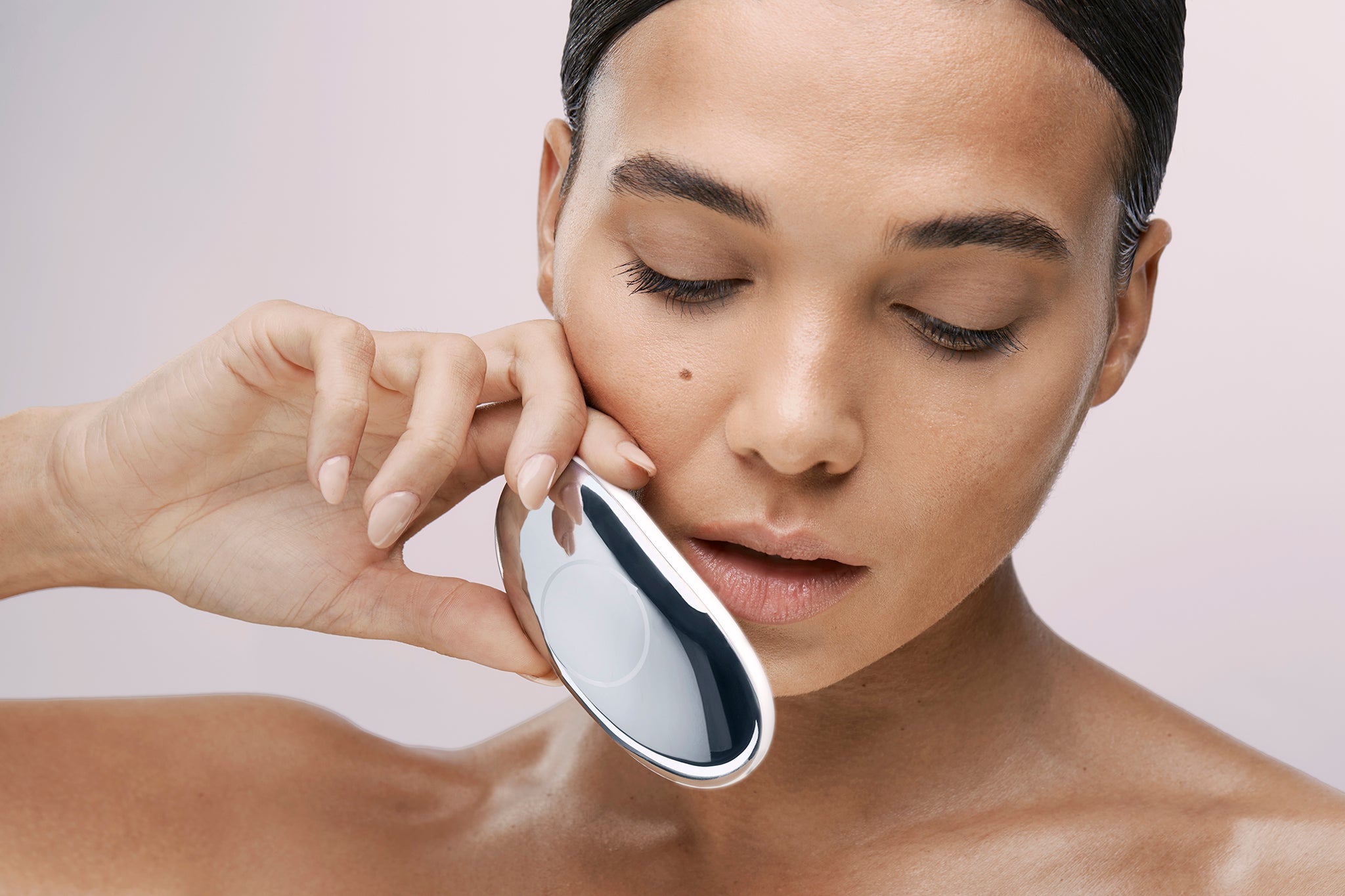
Is microcurrent safe?
Microcurrent is extremely safe for the general population. That said, there are some people who should avoid using it. Temple mentions that microcurrent is not approved for usage during pregnancy. People with pacemakers should also steer clear of microcurrent as it may interfere with how their device functions.
Simon mentions you should also pause your microcurrent facials if you’ve recently had any sort of facial filler to prevent migration. “You can start using microcurrent again 7 days after your injections.”
Who does microcurrent work for?
Microcurrent works on any skin tone and type: just make sure (if you have facial hair) that you have a good shave beforehand. Simon explains that the currents simply won’t conduct over beards or thick facial hair, including 5 o’clock shadows.